
Content Note: This article contains mention of self-harm. If you or someone you know needs help, you can call or text Canada’s 988 Suicide Crisis Helpline, or connect with Kids Help Phone.
Key Takeaways for Communities
- Each person’s housing journey is unique. People experiencing homelessness need tailored support to ensure they can find and maintain safe, decent and affordable places to call home.
- System planners focused on reducing homelessness should ensure their communities have a spectrum of housing and support options.
Dayna Clark was 14 years old when she left her parents’ home, trying to escape a traumatic childhood while struggling with her mental health and self-harming.
Two years of precarious housing and homelessness followed.
“I was homeless with a partner, who was also a youth, and we stayed together on the streets because we had nowhere to go where both of us could be safe, and that would accept us,” Clark said.
Couch surfing with friends. Sleeping rough. Crashing on floors and staying in shelters. Clark says she did it all.
“The experiences I had to go through were really, really hard. We didn’t have this program,” she said. “I ended up getting pregnant with my first son, and that’s when I decided I was going to finish high school and I was going to change my life.”
Clark leans on that lived experience in her work now as a transitional support worker with the Elizabeth Fry Society at Ethen’s Place, a rapid rehousing program for youth aged 16 to 24 in Orillia, Ontario.

Dayna Clark is a transitional support worker with the Elizabeth Fry Society at Ethen’s Place.
It’s one of two rapid rehousing programs funded by the County of Simcoe that have already collectively helped 40 youth and seniors move from homelessness into safe and affordable housing since opening in 2024.
The programs — Ethen’s Place with 14 rooms in Orillia, and Rodger’s Way with 13 rooms in Collingwood for seniors 55 years and older — are designed to help people with low- to moderate-acuity needs recover from their experiences of homelessness, connect to community resources and social assistance when needed, and find a permanent place to call home.
The two facilities, previously utilized as mining base camps in northern Alberta, were purchased to support temporary residential programs, later determined to be rapid rehousing programs.
“Every person has unique strengths and struggles, so a range of different housing and support options are needed to ensure that everyone can have a safe place to call home,” said Ashley Barnes-Cocke, the Canadian Alliance to End Homelessness’ lead Improvement Advisor for the County of Simcoe.
“These two rapid rehousing programs — alongside the County’s Bridge to Stability bridge housing project — are important, complementary initiatives that are reducing homelessness by building out that spectrum of options,” said Barnes-Cocke.
Ethen’s Place: ‘The first time I felt safe ever’
Clark says she knows of one youth who was sleeping for quite some time in a tunnel under a bridge, before a friend found out and asked his family to take him in for a couple of years.
After some time at a shelter, that youth moved into Ethen’s Place.
“That’s an example of a story where youths didn’t want anyone to know their circumstances and didn’t want to ask for help. If it wasn’t for a friend who said, ‘come stay with me and my family,’ who knows what could have happened,” said Clark.
“I’ve had many kids come here and tell me, ‘this is the first time I felt safe ever.’”
When Violet* moved into Ethen’s Place, she had just spent the entire summer sleeping on the couch of a friend’s family, after several turbulent years.
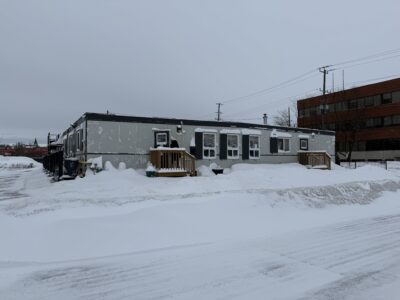
Ethen’s Place is a rapid rehousing program for youth aged 16 to 24 in Orillia, Ontario.
After her parents separated, Violet says she and her mother often got into disagreements and her mother would threaten to kick her out of the house.
One time, Violet said her mother dropped her off at an emergency shelter in downtown Barrie, saying she couldn’t stay at home any longer.
“I was texting my mom begging and saying I was sorry. And then close to 2 a.m., she was finally like, ‘okay, I’ll give you some grace. You can come sleep in the garage,’” recalled Violet, as tears rolled down her face.
She ended up sleeping in her room that night. The next morning, Violet packed some of her things and went to high school. Instead of going home after, she started crashing at friends’ houses for as long as they’d let her stay.
Violet was on the County of Simcoe’s By-Name Data list as a youth experiencing homelessness and was later connected through Coordinated Access to Ethen’s Place.
A housing benefit is essential to making rent affordable
It took some time to settle into the program, but Violet says she eventually started setting goals, and working toward achieving them. She was connected to a therapist, who helped her to stop self-harming and to work through her anxiety and build self-confidence.
Within six months, Violet was offered a spot in Elizabeth Fry Society’s Oxford Street location, a three-bedroom house where youth can live for up to one year, receiving some support from an intensive case manager while looking for a more permanent private market rental.
Violet received some work training, and with the help of a case worker, was able to get a part-time job. Then it was time to start looking for her own place.
“I just didn’t know what to look for. Everything’s so expensive that I’m not going to be able to afford rent. I have pretty good pay for where I’m working as a first-time job, but with how much everything costs, it’s not enough,” she said.
The case worker came in clutch again, helping Violet find a place she could afford with the help of the Canada-Ontario Housing Benefit — a monthly rental benefit jointly funded by the provincial and federal government to assist people with lower incomes, in more vulnerable conditions, afford to pay rent in the private market.
Now, Violet says she feels safe and secure in her own home, for the first time in years.
While average market rental rates are starting to decline in many cities across the country, the price of market rent is still too high for many people with low-income or relying on social assistance, said Maggie Rodrigues, CAEH’s Government Relations Lead.
“Violet’s story demonstrates the power of a portable housing benefit. Expanding access would help end homelessness for more Canadians by supporting them to access the rental market,” Rodrigues said.
Rodger’s Way: Rapidly rehousing seniors in Simcoe
More than 60 years older than Violet, Pierre found himself in a similar situation, dropped off outside a shelter in downtown Barrie.
It’s a situation he’s still struggling to understand, after having several successful careers over the course of his lifetime, as a restauranteur, an international trade representative promoting Canadian businesses in Europe, and later a car dealership owner and executive director of a non-profit.
He retired to support his wife when she was diagnosed with cancer, and shortly after she died, Pierre himself was diagnosed with kidney cancer and had to have emergency surgery.
A few years later, Pierre had a second surgery for colon cancer, but experienced significant complications leading to multiple comas and a four-month stay at the hospital. When he was finally healthy enough to be discharged, he learned that his savings account had been drained, and he had been evicted.
“Lost my car. Lost my rent. Lost my family. Lost everything. I was in the streets with just a little plastic bag with two shirts and two shorts,” said Pierre.
“I was ready to die. Where was I going to go? What will happen with me? And all my life, I was like a winner, and suddenly … people don’t know how stressful it is to be homeless.”
Eventually, Pierre was connected to a place at Rodger’s Way Home in Collingwood through the County of Simcoe in late 2025. The County’s By-Name Data meant that county staff knew who Pierre was and what kind of supports he needed to help him exit homelessness, and Coordinated Access allowed the county staff to match Pierre to Rodger’s Way as soon as a room opened up for him.
“My health is better here than there. Mentally, I feel better too,” he said.
The staff with Contact Community Services, the agency operating the program, are helping Pierre heal from his experiences, and look for an affordable place to live that can meet his accessibility and mobility needs.
Lacey De Beer, the supportive rapid rehousing program supervisor, says seniors experiencing homelessness from across Simcoe County come to the program from living in shelters, vehicles, encampments and the streets.
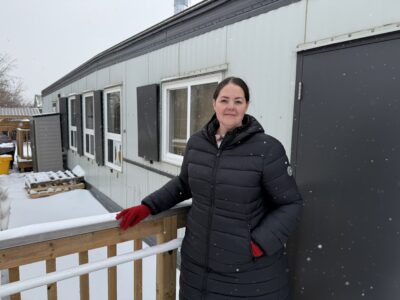
Lacey De Beer is the supportive rapid rehousing program supervisor with Contact Community Services.
“We’re kind of trying to rebuild them and give them a strong foundation so when they leave here they feel confident that they’ll be able to live independently and be successful. We want them to feel that confidence in their bones,” De Beer said.
Residents pay rent, set at 30 per cent of their income, and have their own rooms, with access to the kitchen, and 24 hours of support to set and achieve their objectives and find their own permanent home.
The program staff also provide at least six months of support after a resident has moved into their own place.
So far, it seems to be working, De Beer said. All 17 of the former residents who have moved into a new home are still housed now.
Pierre says he has a few places that he’s going to look at soon, to see if they could be a good fit for him to move into.
“I would like to continue my life as it was before … thanks to [the program staff], I’m still a happy man, and I still believe that tomorrow will be good,” said Pierre.
*This Bright Spot is funded by the Government of Canada.