
Key Takeaways for Communities
- When Indigenous organizations lead the work to reduce homelessness, culture, community and belonging are weaved in. As Miywasin is showing, that can help improve an entire community’s homelessness response system.
- Many people who are incarcerated do not have a permanent home and are discharged into homelessness — whether that is staying in shelters, sleeping rough, or couch surfing. Miywasin’s HRIF project addresses that systems gap through intensive case management, housing stabilization funds, and cultural and community connection, which seems to improve housing stability and retention.
- Miywasin Friendship Centre has incorporated a cultural wellness assessment as part of their intake process, helping connect people with supports that instil a sense of belonging.
- Flexibility in project design and implementation is important in the work to reduce homelessness, particularly as the local context changes. Amidst ongoing shifts in the provincial remand system, Miywasin adapted their project to cover other gaps where people are discharged into homelessness from health care, treatment and child family services.
For Mark*, the Indigenous-led Roots & Roofs post-remand housing stabilization program in Medicine Hat, AB, came at a critical moment.
The 56-year-old has been working in British Columbia and Alberta for decades and living on-and-off in Medicine Hat for the last 15.
But it’s been a hard year.
His employer lost out on a contract and laid him off, marking one of the first times he was without work since he was 14. Without family, income nor company-provided housing, Mark didn’t have his own place. He couldn’t find another job.
Then he got sick; a doctor ordered tests for a spot on his lung. His brother died a month before Christmas.
“Overnight, it can just happen to anybody, man. Anybody. You get sick and you lose your job, and then you got no income. It’s scary,” he said.
In December, Mark was arrested for disturbing the peace by Medicine Hat police at the motor home he was staying in and sent to a remand centre — a facility where people are held before their court proceedings and sentencing are finalized.
“When I got released three weeks later, I had nothing. Nowhere to go. No money. The clothes on my back. That’s it,” Mark said.
He was released without charges from remand into homelessness and stayed on a friend’s couch for a month.
Then he got connected to Roots & Roofs. By February, Mark was accessing community resources and income supports. He even found an apartment that he could afford to rent.
“When I met Alyssa [the program coordinator], she just took weight of the world off my shoulders … she went above and beyond for me. Above and beyond,” Mark said, as tears formed in his eyes.
“It gives me back my dignity, my pride, makes me feel like part of the community again. I’m very grateful for it.”
Housing stability is more than a roof over your head
Mark was the first person housed through Roots & Roofs, which started in January 2026. The one-year project is a partnership between the Miywasin Friendship Centre, the Canadian Alliance to End Homelessness (CAEH), and the National Indigenous Homelessness Council (NIHC), a coalition of all Indigenous-led community entities and advisory boards across Canada.
Roots & Roofs received $368,998 through the Homelessness Reduction Innovation Fund (HRIF), a $45-million federal fund delivered by CAEH that supports data-driven improvement projects to measurably reduce homelessness at a population level, while developing lessons that can support similar efforts across Canada.
The aim of Roots & Roofs is to reduce homelessness by increasing the number of people moving into housing in Medicine Hat every month, with a focus on people discharged from a remand centre.
An estimated 30 per cent of people released from Canadian correctional institutes will face homelessness within two years. People released without stable and secure housing have a greater likelihood of re-entering the justice system, according to the 2022 Federal Framework to Reduce Recidivism.
“Housing stabilization is about much more than having a roof over your head … Long-term housing stability is more likely when people are supported holistically and feel connected, valued, and like they belong in their community,” said Holly Gould, program manager with Miywasin.
Early results show benefit of cultural connection
The project is innovative in its focus on connection to community and culture as part of helping people maintain housing and reduce recidivism.
Participants complete both a standard housing and needs assessment and a cultural wellness assessment grounded in Indigenous worldviews of wellness, belonging and community connection.
An intensive case manager connects them with existing cultural programs and services in the community to support healing, while working with them to find safe and secure housing. A rent supplement is available for six months to reduce financial pressure and stress and bridge the income gap people experience after being discharged from remand.
Early results show promising system improvements. Through the first eight months of Roots & Roofs, only one participant returned to remand.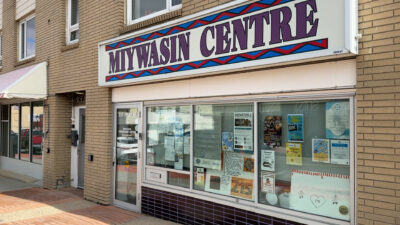
The majority of Roots & Roofs participants who have secured housing have been able to maintain it, with 86 per cent of participants remaining housed after being supported to exit homelessness.
This is an important lesson for Medicine Hat, as it works to continuously improve its homelessness response system and prevent people from falling back into homelessness after being housed.
Since the project started in January, an average of two fewer people have re-entered homelessness from housing every month, dropping from an average of 8.6 people per month in January to an average of 6.5 people per month as of August 2026.
“Housing stability comes when people have access to culture, traditional foods and medicines, ceremony, land-based practices, Elders and Knowledge Keepers, and a community where they feel welcomed and wanted,” Gould said.
As people spend more time connected with Roots & Roofs, their engagement in community and cultural activities has continued to grow, whether they are Indigenous or not, Gould added.
The project demonstrates the broader impact that Indigenous-led organizations can have in reducing and ending homelessness for all when they have adequate resources, said Francisco Urrutia, CAEH’s lead improvement advisor for Medicine Hat.
“Miywasin is bringing Indigenous worldviews and perspectives to improve the way the entire homelessness response system functions in the community,” said Urrutia.
Indigenous-led from the beginning
Roots & Roofs is the first HRIF project across Canada to be led by an Indigenous Community Entity. It was conceptualized, proposed and operated by Miywasin from the very beginning, with support from NIHC to map how data moves through the local homelessness response system and explore approaches to strengthen Indigenous data governance, roles and relationships.
Miywasin also works closely with Medicine Hat Community Housing Society, the Designated Community Entity. MHCHS provides data support to help measure the impact of the project at the system level, while the two organizations maintain a strong working relationship responding to housing and homelessness needs in the community.
“Indigenous communities know what Indigenous people need. Indigenous knowledge and ways of being cannot be added at the midpoint, or at the end of a project and be truly integrated,” said Gould.
“When Indigenous people lead the work from the start, culture, community and belonging are woven into every part of it.”
Indigenous people are disproportionately represented among those experiencing homelessness, and among those who are incarcerated.
Nearly 32 per cent of all people incarcerated in Canada are Indigenous, according to the 2023 annual report of the federal correctional investigator. That was an increase from 23 per cent in 2013.
In the 2024 Point-in-Time Count, almost one-third (30%) of all people experiencing homelessness in Canada identified as Indigenous — representing six times the proportion of Indigenous people among the total Canadian population. The proportion of Indigenous people experiencing unsheltered (40%) or hidden homelessness (46%) was even greater.
The overrepresentation of Indigenous peoples in both homelessness and corrections cannot be understood in isolation from the broader impacts of colonialism and the disruption of relationships to family, culture, community and land.
“We recognize, as Indigenous scholar Jesse Thistle describes, that Indigenous homelessness is not only the absence of housing, but also the loss of relationships to family, culture, community, and land,” said Gould.
“While this project is Indigenous-led and grounded in Indigenous ways of being, these teachings benefit everyone. The project welcomes both Indigenous and non-Indigenous participants, and we see firsthand how cultural connection, community, ceremony, and holistic wellness strengthens all people’s ability to heal and remain housed,” said Gould.
Project making pivots and improvements along the way
Homelessness is dynamic and complex, and HRIF projects are about learning what works.
This project demonstrated that cultural and community connection improve housing stability, especially for people exiting remand.
Throughout the process, Miywasin has been forced to make pivots and adjustments to the project as it aimed to meet its target of increasing the number of people moving into permanent housing, despite changes to the policy landscape and tightening rental market conditions. There have been several recent changes to provincial income assistance programs that have reduced the fixed incomes available to seniors, people who are unemployed, and people with disabilities.

Alyssa Roads is the Roots & Roofs program coordinator.
“Even when I’m supporting people with higher levels of monthly income, it’s still really hard to find a place. The financial piece is one thing, but the stigma is another,” said Alyssa Roads, the Roots & Roofs program coordinator.
“A lot of landlords are very hesitant to rent to people who are accessing any form of social or community supports … and with people coming out of remand, for example, you’ve got a gap in rental history, and there’s not one place [here] that doesn’t ask for rental history or references,” she added.
There have also been provincial changes to the remand and corrections system, which has complicated the original referral pathways, making it difficult to connect with people before they are released into homelessness.
In August 2026, CAEH published first-of-its-kind research that demonstrated the link between housing affordability, vacancy rates, and homelessness.
In Medicine Hat, market conditions for the most affordable units are getting worse, according to a CAEH analysis of data from the Canadian Mortgage and Housing Corporation (CMHC).
From 2023 to 2025, the average monthly rent price for those lowest-cost units has increased by 14.3%, from $750 to $857. In that same time frame, the vacancy rates for those same units have dwindled to 0.5%, down from 2.7% just two years earlier.
In practice, that means it’s incredibly difficult to find affordable places for participants in Medicine Hat and increase move-ins for people trying to exit homelessness, Roads said.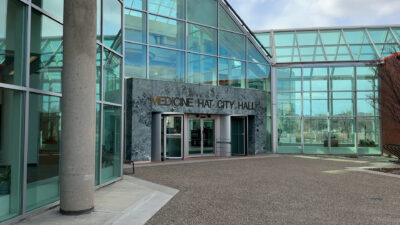
But in the spirit of continuous improvement, and with coaching support from improvement advisors at CAEH, Miywasin’s project team has been testing small changes to improve their outcomes.
Despite low vacancy rates, Roads has been reaching out to private landlords interested in prioritizing clients on income support. She’s also been helping people connect with different community agencies to increase their incomes and address barriers to employment.
The Roots & Roofs project team has also worked with additional agencies to expand referral pathways into the Roots & Roofs program from other institutional settings, including healthcare, treatment programs and child and family services.
“This project has faced many challenges outside its control. But Miywasin has been flexible, making pivots as they encountered new difficulties and adapting the project to incorporate the lessons they’ve learned about their housing system,” said Urrutia.
Miywasin’s HRIF pilot will end in December 2026, but the lessons and system improvements will continue.
“Roots & Roofs is helping create a more coordinated, effective and culturally responsive homelessness response in Medicine Hat and the surrounding region … demonstrating the value of culturally grounded, Indigenous-led approaches to homelessness prevention,” said Roads.
*This Bright Spot was funded by the Government of Canada.