
Key Takeaways for Communities
-
Input from Lived experts is essential to improve homelessness response systems.
-
To make this input meaningful, and improve transparency and accountability, community agencies must close the feedback loop by reporting back to lived experts.
-
Lived experts should be paid a living wage for their contributions, offered support for transportation, and given access to trainings where possible.
The Lived Expert Advisory has a list.
It’s filled with agencies that offer a range of homelessness, mental health and addictions services and programs in Niagara Region.
Nearly every month, a new agency is invited to present before the group of roughly 20 people, all with experience of homelessness and at various stages in their housing journeys.
The members of Niagara’s Lived Expert Advisory, valued as subject matter experts, are paid a living wage to be there, to share their experiences and insight that will help organizations adapt their work to better meet the needs in the community.
“It shows insight on the part of the leaders to ask for the insight from the people who are experiencing homelessness, the end users of the programs and services they offer,” said Ryan Logtenberg, who joined the advisory nearly a decade ago after some six years of staying in emergency overnight shelters and sleeping on people’s couches.
“If you’re trying to develop a system that’s going to help people, you want to have that input from the people that it’s helping. And their experiences, they’re going to let you know what’s working, what’s not working,” Logtenberg added.
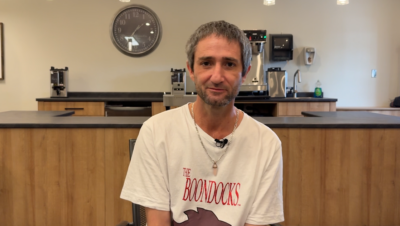
Ryan Logtenberg joined the Lived Expert Advisory nearly a decade ago.
One of the unique features of Niagara’s Lived Expert Advisory is that they require agencies to come back to the group and share how the advice and recommendations were implemented.
They call it closing the feedback loop.
Closing the feedback loop
“This is a population that is used to being watched, but not seen.”
That’s a quote by Father Greg Boyle, when speaking about his work with former gang members in the United States. It’s a quote that David Michels, manager of homelessness services for Niagara Region, thinks of often as it relates to people experiencing homelessness.
An increasingly common practice for agencies is to reach out to people with lived experience of homelessness and ask for feedback or guidance.
“We always felt like there’s this part of the story that’s missing, where you go back to the person and say, ‘hey, I actually heard what you said, and this is the change that we’ve made,’” said Michels.
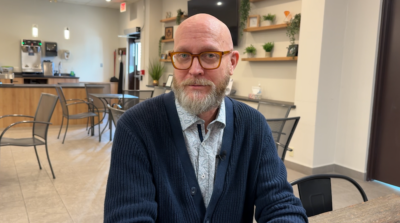
David Michels is the manager of homelessness services for Niagara Region.
By closing the feedback loop, Michels says the Lived Expert Advisory is not only creating more accountability and transparency about how this feedback is being used, but it also shifts the power dynamic.
“You hear people in the group say, ‘I’ve made change. I can be a change agent. I can have things altered that I don’t agree with, and someone did hear me,’” he said.
This is an important initiative to ensure continuous improvement within the Region’s homelessness response system, says Chantal Perry, the Canadian Alliance to End Homelessness’s lead Improvement Advisor for Niagara Region.
“The expertise from people with lived experience is central to designing better homelessness response systems, addressing gaps in the system, and ultimately reducing and ending homelessness. Niagara’s model demonstrates a way to ensure the recommendations from lived experts is being incorporated in a meaningful way,” Perry said.
‘People value what we have to say’
Donna remembers how weird it felt to have someone actually listen.
For more than 35 years, she struggled with substance use, addiction and homelessness.
“When you’re in addiction, it feels like nobody wants anything to do with you. It’s like your word has no meaning … and you don’t feel welcomed in very many spaces,” Donna said.
“Coming into the Lived Expert Advisory was a totally different experience. People value what we have to say. People were listening because they know we have so much experience in our life that is valuable in developing programs,” she said.
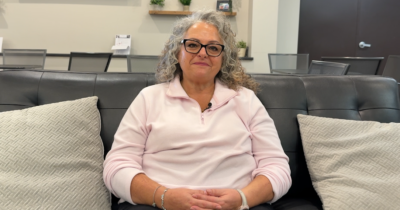
Donna works as a peer support worker with REACH Niagara, and is a member of the Lived Expert Advisory.
Now, Donna works as a peer support worker with REACH Niagara, an agency providing healthcare services to people experiencing homelessness, and has been in recovery for the past four years.
Many of the agencies will come in and explain the programs and services they offer, or their plans for a new service. Then, they’ll ask if people have had experience with these kinds of services, what their experiences were, what they can change and do better, how they can reach more people that need these supports.
“Our recommendations are changing lives. And that to me is the most important part of it. That’s what my sobriety is about … that people can hear my stories and start down a different path. It’s incredible,” said Donna.
Impact at all levels of the community
The feedback from the Lived Expert Advisory has been incorporated into all kinds of agencies.
In 2023, the advisory group developed a list of 10 recommendations for the region to change or improve how they respond to and reduce homelessness.
Those recommendations included ensuring there are enough safe, affordable housing for everyone experiencing homelessness, more accessible and discrimination-free mental health and addictions supports, more trained peer support workers, and the inclusion of people with lived experience in homelessness response services.
“Community members experiencing homelessness need to be included meaningfully to be a part of the solution. We are community members. We are not a problem for others to solve,” said one of the ten recommendations.
Marni Katzman, the co-chair of the Lived Expert Advisory, presented the recommendations to the Downtown Safety and Well-Being Committee, which included the mayor and other members of city council.
Now, she sits on the committee.
“They take our input very seriously, which is a good feeling, to actually visually see them react. They tell us how much they value us as experts in these unfortunate situations,” said Katzman.
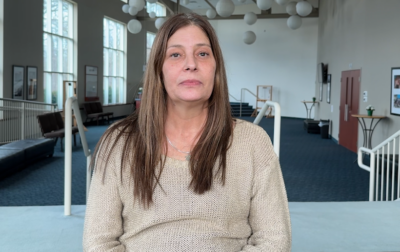
Marni Katzman is the co-chair of the Lived Expert Advisory.
Two years ago, Niagara Region presented their plans to introduce a new Homelessness and Addiction Recovery Treatment (HART) Hub and received a lot of feedback on everything from where the hub should be located to the kinds of programs that should be offered.
Katzman says it’s powerful to see those recommendations now implemented with the opening of the HART Hub.
More recently, the supportive housing strategy came to speak with the lived experts about the plan as it is being developed, how they define low, medium and higher acuity, and how systems should be supporting people with different levels of need.
A follow-up meeting is scheduled for the Niagara Region team developing the strategy to come back and share how the feedback will be implemented.
“It makes me emotional. There are some meetings where it’s so powerful that there are tears involved … it’s the passion for the community. Everybody knows everybody in the homeless community, and unfortunately, there’s a lot of death,” Katzman said.
For many lived experts, including those actively experiencing homelessness, the recommendations they are providing can mean the difference between life and death.
Living wage, transportation and other opportunities offered
The size and composition of the Lived Expert Advisory changes each month, depending on people’s availability and capacity to participate.
There are some regulars, who attend most months, and others that have dropped in just once or twice. Some have been stably housed for several years, while others are staying in shelters or encampments.
The diversity of voices is important, Michels says, because each person’s experience is unique and homelessness response services need to be able to meet people wherever they’re at in their housing journeys.
The meetings are often hosted at a shelter, and they will soon be hosted in different locations throughout Niagara Region to improve accessibility for people living outside the main city centre of St. Catharines.
Means of transportation to the meetings are always provided, Michels said, and everyone is paid an honorarium at the rate of a living wage for their participation and sharing their expertise.
If some members express an interest to learn more about a certain topic, the homelessness services division at Niagara Region sometimes can offer the ability to attend additional meetings or seminars outside of the regular monthly meetings, and they will be paid for their time, Michels added.
Niagara Region has also been able to pay for some people to be trained and certified as a peer support worker, and they have gone on to work for different agencies in the region.
There is always a new project in the works with the Lived Expert Advisory, Katzman said.
The next one will be a Living Library, where lived experts will share the stories of their housing journeys, stories of hope and bumps along the road, and the videos will be shared in the community.
“I can give back to my community with my experience, and that inevitably will help others that are going through what I’ve been through,” Katzman said.
This Bright Spot is funded by the Government of Canada.