
A series of photos hang in the hallways of Horizons at 106, a 100-unit transitional supportive housing facility operated by End Homelessness St. John’s (EHSJ) in Newfoundland.
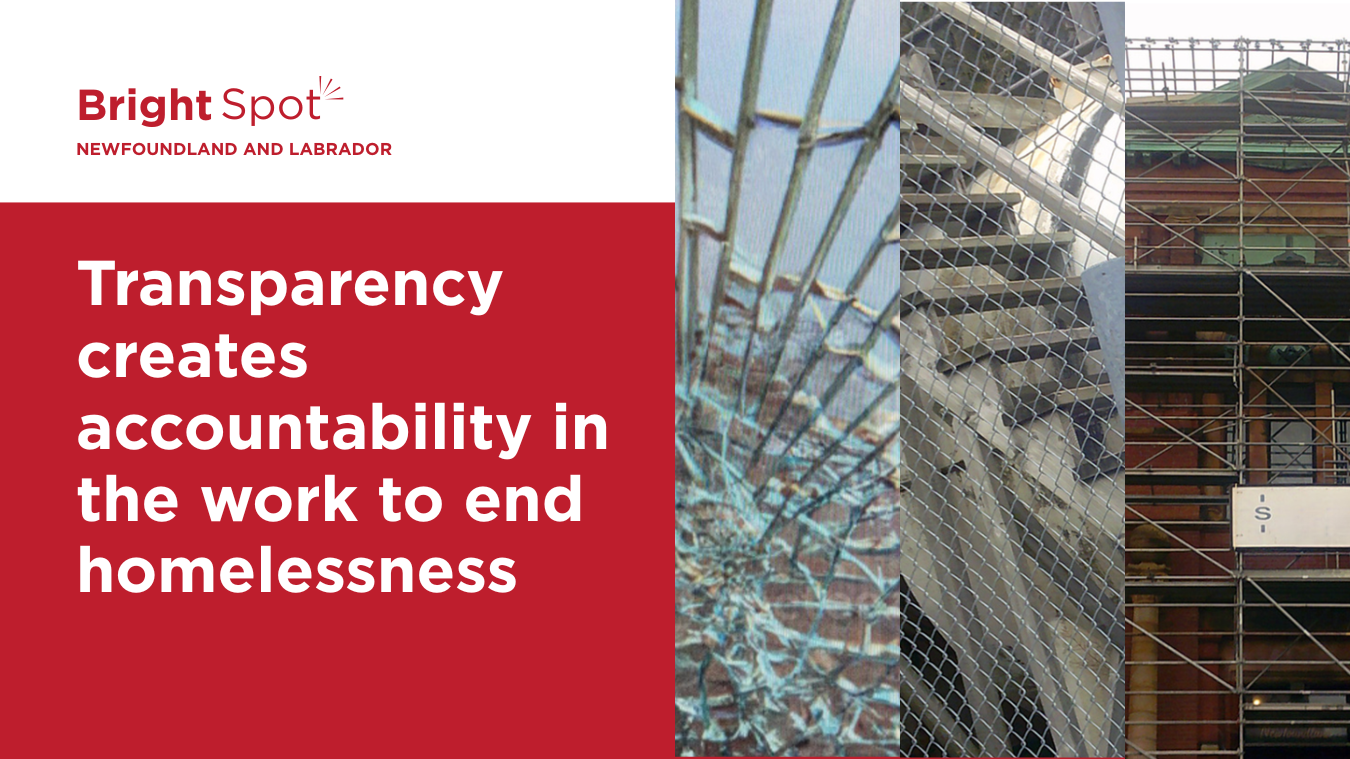
Under an image of broken glass, the words “Homelessness is chaos. There was never calmness, always chaos,” are inscribed.
“I chose that picture because, just like broken glass, homelessness can be fixed,” said one resident at Horizons at 106, who participated in the project.

I felt so alone and lost. I needed help.
Further down the hallway, the words “I felt so alone and lost. I needed help,” sit under the photo of a lonely sailboat floating in a vast expanse of empty ocean.
They’re part of a photovoice project recently completed by EHSJ, in partnership with residents living at Horizons at 106 and people still actively experiencing homelessness.
The intention is to give people an opportunity to share their experiences of homelessness in St. John’s and get this information into the hands of members of decision-makers and the public, said EHSJ Executive Director Doug Pawson.
“Homelessness can be a really isolating experience. We talk about people falling through the cracks. These are those folks who have been bounced around and have experienced significant amounts of trauma through their lives,” Pawson said.
“For them to share their experience in such a vulnerable way, it is really moving.”
The photovoice project participants were invited to take photos, find images, and share their stories and experiences of homelessness. Staff supported the participants, helping with imagery and documenting their words.

I can see the steps to my greatness – but i just can’t get there.
The final collection also included AI-generated images that captured the feelings shared.
“The photos I picked shows what it is like to be homeless and not have the supports or the means to change it,” said another participant in the project.
When asked why they wanted to participate in the project, the participant said, “to get people to see the hardships on homeless people and not just look at us as bad people. People need to stop judging us and think that at any time, they could be in the same position.”
Changing the public discourse in Newfoundland and Labrador
In recent years, End Homelessness St. John’s has developed a series of materials to educate the public about homelessness, its causes and solutions.
The organization released a communications handbook called “How We Talk About Homelessness in St. John’s” in 2024.
“I think we’re quick to generalize and stigmatize people experiencing homelessness, and we’ve lost our ability in many ways to think about that experience,” said Pawson.
“We know folks have empathy because when we had wildfires in this province in the summer [of 2025], there was a quick response. We’re really good at responding with empathy to acute crisis, but chronic crises like homelessness have kind of fallen to the wayside. I really worry about that for our community and around the country,” he said.
The Lived Experience Council for End Homelessness St. John’s wanted to help people understand the issues related to homelessness and noticed a lot of people were talking about homelessness in a stigmatizing way, often conflating homelessness with mental health and addictions.
“Many folks who are experiencing homelessness have mental health and substance use disorders, but they’re separate issues,” said Pawson.
“When we conflate things, it just stigmatizes folks in a way that’s really unhealthy. It’s not productive, and it takes the eye off the solutions that are needed on both fronts, for both sets of issues that people—housed or unhoused—are dealing with,” he added.
The initiative took close to a year to go from concept to print.
It includes a range of sections, including why people become homeless, data about homelessness in St. John’s, how to end homelessness, common myths and stereotypes and how to speak about homelessness.
Once the first draft was finished, it was reviewed by the Lived Experience Council to ensure the messaging was clear and reflected their voices and perspectives.
When the handbook was published later that year, the reaction was swift and overwhelmingly positive.
Academics, journalists, government officials, people in the homelessness sector—the list of people reaching out was staggering, Pawson said.
Everywhere staff members from EHSJ go, they bring the handbook with them to distribute. And Pawson says he’s seeing a difference in the public discourse.
“I’ve noticed some of the media personalities here talk about people experiencing homelessness—not homeless people. They also have corrected people on air, where the host will correct folks to say ‘not everybody who’s experiencing homelessness has an addiction,’” he said.
“It takes time. It takes resources, but it does make a difference. For us developing materials that re-centres empathy, it is having a really positive impact, and it’s worth it.”
Transparency creates accountability in the work to end homelessness
End Homelessness St. John’s is the designated community agency responsible to administer the federal Reaching Home program.
They manage both the shared information system that tracks the number of people experiencing homelessness in real-time—known as By-Name Data— and the coordinated access table, where community agencies come together to collectively prioritize and support people to move from homelessness to housing.
These are the two keys to an effective and responsive local homelessness system, according to the Canadian Alliance to End Homelessness (CAEH), which coaches communities to build and improve their response systems, moving from managing homelessness to ending it.
As the organization responsible for systems planning in St. John’s, Pawson says it’s important to engage in public education initiatives that both elevate the voices of the people that use the system of supports and inform the broad public about their systems work.
“We take that responsibility, demonstrating leadership and advocacy, and being honest about what’s working and what’s not,” said Pawson.
The organization recently updated and published a homelessness dashboard on their website, offering monthly updates on the number of people experiencing homelessness, and how many people were housed.
“We want things to be front and centre so we can be transparent. If we can be transparent, we can be accountable, and we want that from our government partners,” Pawson said.
“We’ve often heard that homelessness is a policy choice and failures of public policy. We want decision-makers to have this information at their fingertips. Same with the media and the public.”
Across Canada, communities are struggling to frame homelessness as a systemic issue with root causes rather than individual failings, says Chantal Perry, CAEH’s lead Improvement Advisor for St. John’s.
“Educating the public about homelessness and humanizing the issue is vital to dispel harmful myths, foster empathy and mobilize political and public support. An informed public is more likely to advocate for effective, evidence-based policies and systemic changes that ends homelessness, rather than calling for short-term reactions or aggressive, criminalizing policies,” said Perry.
“Throughout my work with End Homelessness St. John’s, I have seen them continually keep people experiencing homelessness at the centre of their local response system, and their public education work is essential to build community will and action to end homelessness.”
Public education initiatives grounded in lived experience
All the public education initiatives created by End Homelessness St. John’s are reviewed by the Lived Experience Council.
“We really want to make sure these initiatives are grounded in the perspectives of those with lived experience, and we wanted to make sure we were doing right by them,” Pawson said.
It takes more time, he says, but it’s worth it.
“At the end of the day, people see either their voices reflected in it or their thoughts reflected in it, and they know it will get into the public discourse in a way that’s safe for them,” Pawson said.
Participants in the photo voice feel the same.
“It feels great [to see this photo voice displayed], because if my story helps motivate other people, then I’ll feel like I contributed,” said one person.
“It is amazing to see and know I was a part of it,” said another contributor.
“1,000 per cent needed.”
Check out End Homelessness St. John’s resources here:
- Communications guide
- Photovoice (See embed above)
- Public Dashboard
All images provided by Horizons at 106 – learn more at wecanendit.com
This project was funded by the Government of Canada.