
As temperatures plunged below –30 C in the winter of 2023-24, something extraordinary happened in Thunder Bay, on the northern shore of Lake Superior.
Nearly everyone living in encampments was brought in from the cold, temporarily housed in hotels for the winter.
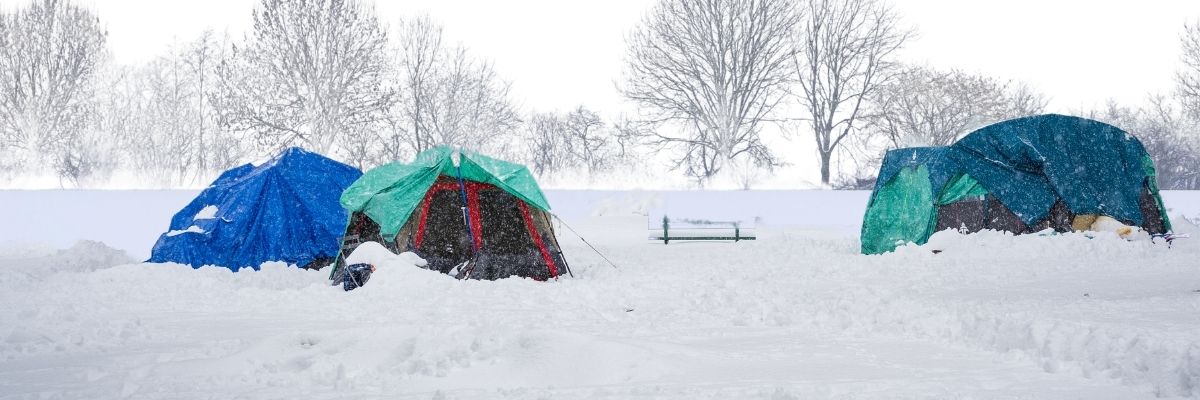
“There were people dying outside. Overdosing outside. There were fires, as people were trying to keep warm,” said Bonnie Krysowaty, director of projects and community initiatives with the Lakehead Social Planning Council.
Lakehead Social Planning Council and the Thunder Bay Indigenous Friendship Centre collectively received more than $1 million that winter in “top-up” funds under the federal government’s Reaching Home strategy to reduce chronic homelessness nationwide by 50 per cent by 2028.
The social planning council is the lead organization administering funds in Thunder Bay for the designated community stream of Reaching Home funding, while the friendship centre is the agency responsible for Indigenous homelessness funding. 
“The first thing we did when receiving this money was to speak to each other to figure out what we should do with it. And we knew it needed to go to encampment supports. In Winter ‘23-24, co-funding this project meant lives were saved,” said Krysowaty.
According to the 2024 Point-in-Time count, 78 per cent of people experiencing homelessness in Thunder Bay are Indigenous.
“It’s a disproportionate number of Indigenous people experiencing homelessness … and so it’s important for us to be actively at the table, making decisions around the housing and homelessness system in our community,” said Annika Gregg, manager of housing operations with the Thunder Bay Indigenous Friendship Centre.
“We have that direct say and stake in the homelessness response, and it’s taken seriously by our federally funded counterparts, and so to have an Indigenous organization able to take a lead role, that makes a big difference.”
‘It takes work, it takes effort. It’s absolutely worth it’
The collaboration between Lakehead Social Planning Council and Thunder Bay Indigenous Friendship Centre to address homelessness dates to 2016.
The friendship centre received funds from the federal government to conduct the first Point in Time count—a survey of the number of people experiencing homelessness, both sheltered and unsheltered, on a single night—but they didn’t have capacity to organize the survey themselves. So, the two organizations partnered to oversee the work.
“That started the relationship, and then once we knew that we needed to meet federal mandates, like having a Coordinated Access system and By-Name Data, we worked collectively on that, knowing we wouldn’t be able to do it all alone,” said Krysowaty.
It is easier to collaborate, Krysowaty says, because both organizations are non-profits, meaning they have the flexibility they need to “make quick decisions based on community needs collectively, and can easily manage our funding in the same kind of way.”
Now, the friendship centre and social planning council consult each other extensively about their funding decisions and recommendations before they go to their respective community and Indigenous community advisory boards for approval.
“There is no siloing of any work, especially funding decisions, to ensure we aren’t leaving any gaps or funding duplications in service,” Krysowaty said.
“Bureaucracy, rules, regulations and policies … this means collaboration isn’t always easy. It takes work. It takes effort. The collaboration in Thunder Bay took years and years, but it was absolutely worth it,” said Krysowaty.
Gregg says a big part of the strong working relationship is the social planning council coming to the friendship centre with a genuine desire to engage and work together meaningfully.
“Sometimes, the relationship between Indigenous and non-Indigenous organizations is not always given the time it needs to develop and to grow. Sometimes, there’s a desire for quick partnerships and quick responses, like ticking off a check box,” said Gregg.
Many Indigenous organizations are stretched thin, often with less funding or staff but being asked to do similar work as non-Indigenous organizations, Gregg says, adding it can be difficult when Indigenous organizations are asked at the last minute or without lots of context for their perspective.

“Going into the relationship building meaningfully and with purpose … being willing to relinquish some of that control around who makes final decisions, and taking the lead from the Indigenous community entity, I think that’s what really makes a difference.”
It’s crucial for Indigenous funders and service providers to not only have a seat at the table, but to be leading and shaping the homelessness response systems, says Victoria Boyle, the Canadian Alliance to End Homelessness’ lead Improvement Advisor for Thunder Bay.
“Across the country, partnerships like what we see in Thunder Bay—built on shared decision-making, cultural respect, and long-term commitment—are what many communities are striving for and working toward. The work happening in Thunder Bay is not only important, it’s transformative and shows others what is possible,” said Boyle.
Data sovereignty discussions ongoing
That collaboration will continue to deepen in the coming years, as the social planning council and the friendship centre work to develop a new data sovereignty policy.
Lakehead Social Planning Council is the lead for HIFIS, the information management system that holds all data for the community’s By-Name Data of all people actively experiencing homelessness.
“Most of the data is Indigenous data, and we’re quite aware that the ownership of that data really should lie with the Indigenous community, although legally it lies with the Lakehead Social Planning Council. We’re not an Indigenous-led organization, so we must learn how we should be managing this data,” Krysowaty said.
While a policy has not yet been formalized, there is already constant communication.
The social planning council’s HIFIS team recently held a two-day workshop and invited representatives from the friendship centre to join and share their expertise on data collection and dissemination.
And whenever the social planning council receives a request for data that includes any Indigenous data, or wants to publish a report, they share that with the friendship centre with lots of time for exchange and edits before both organizations approve.
The friendship centre added they are taking guidance from the work of the National Indigenous Homelessness Council, a coalition of all Indigenous-led community entities and advisory boards across Canada and are looking to formalize this working partnership with updated consent forms and data sharing agreements.
This is all part of the ongoing work as the two organizations continue to collaborate in their efforts to end homelessness in Thunder Bay.
This project was funded by the Government of Canada.