
In the last six years, the number of people experiencing unsheltered homelessness has increased by 300 per cent in Canada, according to the 2024 Point-in-Time count.
That probably doesn’t come as much of a surprise. Encampments made up of tents and other makeshift shelters have been growing in communities large and small right across the country.
The amount of visible human suffering has grown tremendously, and public concern has been reflected in the growing conversations around homelessness.
But here at the Canadian Alliance to End Homelessness (CAEH), we know there’s a way out of this crisis—housing that’s safe, decent and affordable for everyone.
To make sure people in the most vulnerable conditions are prioritized, communities need to have real-time, reliable By-Name Data of all people experiencing unsheltered homelessness in their area.
Unsheltered homelessness is a priority population for round three of the Homelessness Reduction Innovation Fund—the $45-million fund, funded by the Government of Canada and administered by CAEH, providing one-time grants to eligible communities for targeted, data-informed initiatives lasting up to 12 months that will measurably reduce homelessness.
Being confirmed for quality data on unsheltered homelessness will make your community eligible to submit an HRIF project targeted to this population, which we know is a priority for many communities across the country.
With the expression of interest period opening for the third round of applications in early 2026, we wanted to share this guide to help your community get confirmed for having quality data on unsheltered homelessness.
CAEH can walk your community through the process of being confirmed for quality data, but here’s some information to get you started.
What does it mean to have quality data on unsheltered homelessness?
First, this means that your community has met the requirements for having Quality By-Name Data (QBND), with real-time, individualized data of all people experiencing homelessness in the area.
But this goes even further, meaning there is enough evidence to show that your community has a true understanding of the real-time number of people experiencing unsheltered homelessness in the community—something that can be hard to reliably track.
Having this quality data enables your community to prioritize, coordinate, and triage supports as quickly and efficiently as possible to support your unhoused community members in getting off the streets and into safe, secure environments.
Why is this important?
Everyone deserves a safe, affordable, and adequate place to call home. This is essential to our dignity and well-being.
Homelessness dramatically worsens health outcomes, causing higher rates of chronic disease, infectious illness, mental health crises, and premature death. It also acts as a barrier to healthcare and strains emergency services – and is thus a crisis that impacts all of us.
Often, there is a tendency for communities to respond to unsheltered homelessness by getting people indoors—opening warming centres or paying for people to stay temporarily in hotel rooms.
While this addresses immediate safety concerns, it does not address broader systemic issues or get people into permanent housing.
It also does not move us toward the ultimate goal—increasing the number of people moving into permanent housing.
Doing that starts with having quality data.
Having QBND on unsheltered homelessness is important for ensuring that your community responses to unsheltered homelessness are comprehensive, evidence-based, and effective.
Once your community knows the scope of the problem, they can use this information to make measurable improvements.
This may include things like decreasing the number of people sleeping rough, increasing move-ins for people living in encampments, or shortening the time it takes for someone get connected to the system.
What’s required for confirmation of quality data on unsheltered homelessness?
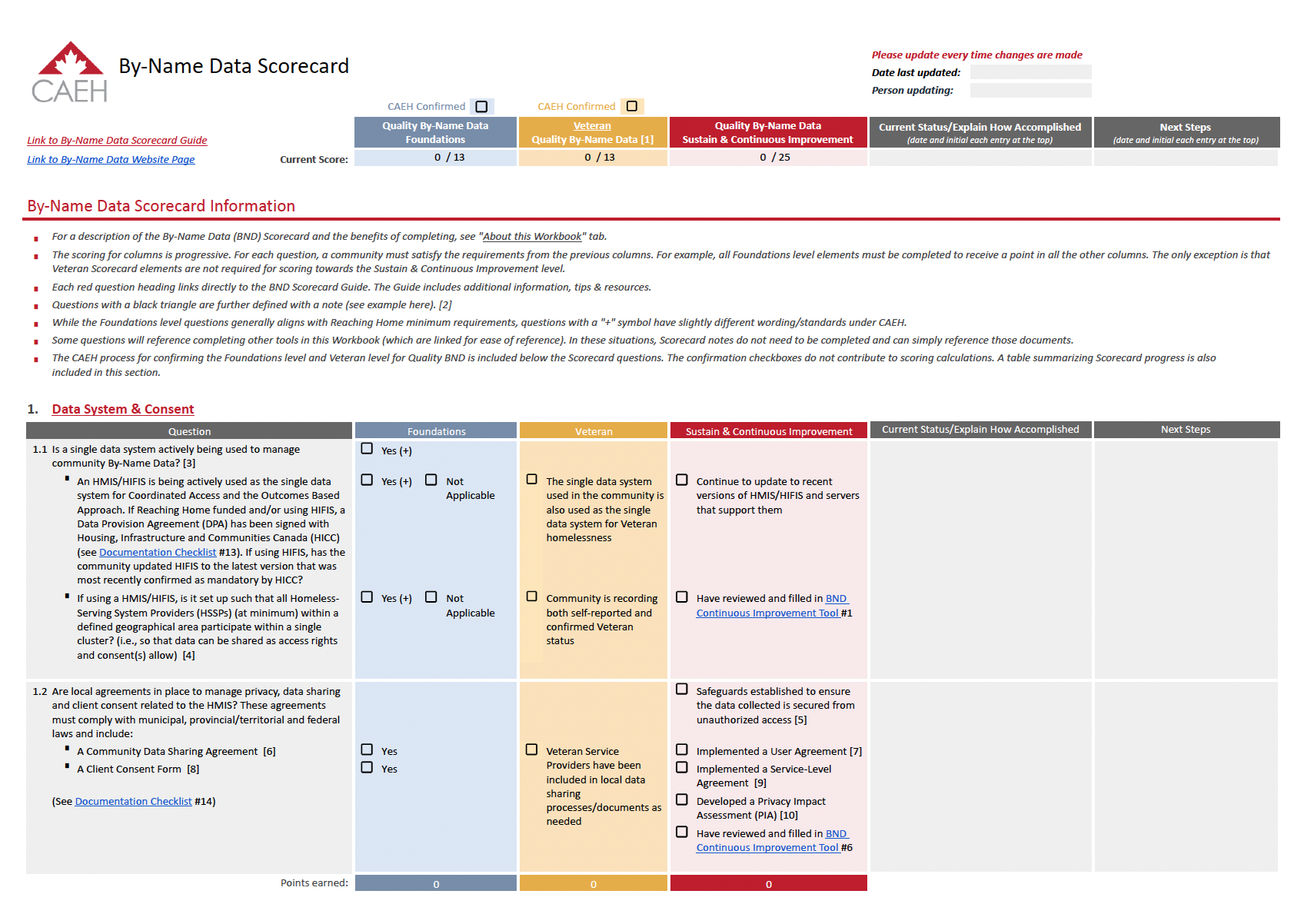 To be confirmed for quality data on unsheltered homelessness, communities must meet standards outlined in CAEH’s BND Scorecard 4.0 and demonstrate system components that lead to quality data on unsheltered homelessness specifically, such as strong outreach and data practices.
This includes having outreach services that connect people to coordinated systems, mapping and regularly assessing coverage areas, defining and tracking encampments, and maintaining records for individuals even if they decline services.
Communities must also maintain a written definition of encampment, to ensure common understanding.
Where to find more information
To learn more about the Homelessness Reduction Innovation Fund, visit: https://caeh.ca/homelessness-reduction-innovation-fund/.
You can find more information about community eligibility here: CAEH – Homelessness Reduction Innovation Fund
You can find the Scorecard 4.0 here: Scorecard and Tools Workbook 4.0
And the accompanying Scorecard Guide here: BND Scorecard Guide 4.0
If you have any questions about the requirements, please don’t hesitate to contact your Improvement Advisor, or email us at: hrif@caeh.ca